




Kitap Eleştiri: Ölü Canlar - Nikolay Gogol

6.28.2011

Ölü Canlar, gerçekçi Rus edebiyatının özgün yazarlarından Nikolay Vasilyeviç Gogol'ün (1809-1852) , üzerinde çok tartışılan ve kuşkusuz en beğenilen yapıtıdır. Romanda 19. yüzyıl Rusyası'nın bir toplumsal olayı, eşine az rastlanır bir yergi gücü ve usta betimlemelerle anlatılır: köleliğin kaldırılmasından önce toprak sahipleri çalıştırdıkları köylü sayısı kadar vergi ödemek zorunda oldukları gibi devletten para da alabilirlerdi. Bundan yararlanmak isteyen roman kahramanı Çiçikov ölü canları yani ölmüş köylüleri (köleleri) karşılık göstererek devleti dolandırmaya kalkar. Konusunu Puşkin'in önerdiği söylenen romanda Gogol, Rus köylüsünün acıklı hayatını ve Çiçikov'un şaşırtıcı kişiliğini kendine özgü canlı mizahıyla dile getirir.

Baştan iki şeyi söylemem lazım:
1. Tembellik etmeyip bir şekilde kitapları okur okumaz hemen yazıları yazmam lazım yoksa karakter isimleri, vs. gibi bilgilerin yanı sıra ne söyleyeceğimi de unutuyorum. Bu kitabı okuyalı da aylar oldu.
2. Rus edebiyatı hayranı değilim.

Ölü Canlar kitap kulübümüz Ex Libris için seçtiğimiz ilk kitaptı. Rus edebiyatı hayranı olmadım hiç ancak konuyu okuyunca insan neler olacağını merak ediyor. İtiraf etmem lazım ki kitabı bitirmem çok zor oldu. Ölü Canlar'ı muhtemelen bir daha asla okumayacağım ancak şunu da söylemem gerekiyor ki aslında çok iyi yazılmış ve kurgulanmış bir kitap kendisi. 

Gogol'ün gözünden hiç bir ayrıntı kaçmıyor. Bu çoğu zaman çok sevdiğim bir durum olmasına rağmen bence derecesi iyi ayarlanmalı çünkü aşırı ayrıntı hikayenin akışını yavaşlatıyor, insanı sıkıyor. Bir de şöyle bir durum var... Ben genelde okuduğum kitaplara renk veriyorum. Mesela vampir kitapları kırmızı tabii ki, bilim kurgular parlak mor, aşk romanlarının bazıları pembe bazıları kusmuk rengi... Şimdiye kadar okuduğum Rus Edebiyatı kategorisindeki tüm kitaplar ise bunalım grisi ve Ölü Canlar da buna dahil.

Şimdi etkileyici kısımlarına geçelim kitabın... Kitabın yapısı dizi filmlerinki gibi kurgulanmıştı. Çiçikov'u ölü canları toplarken takip ediyoruz ancak her bir bölümde farklı bir ortam, farklı insanlar var. Bir yandan tanıdık yüzler de karşımıza çıkıyor tabii. Çiçikov'un insanlarla görüşmelerini, sohbetlerini, hangi yemekleri yediklerini oldukça ayrıntılı bir şekilde izliyoruz. Rusya'nın o zamanki durumunu net bir şekilde ortaya koymasının yanı sıra Gogol karakterleri de oldukça başarılı bir şekilde çiziyor. Özellikle farklı siterotipleri tanımak oldukça keyifli. Eminim ki kitaptaki pek çok karakter her birimizin hayatında var. Aynı zamanda hikaye de oldukça iyi bir şekilde kurgulanmış ve tarihi ayrıntılar da olayları zenginleştiriyor. Yalnız ben Rus Edebiyatı limitimi doldurduğumuz hissediyorum; en azından şimdilik.

Book Review: Dead Souls by Nikolai Gogol

6.27.2011


Dead Soul is eloquent on some occasions, lyrical on others, and pious and reverent elsewhere. Nicolai Gogol was a master of the spoof. The American students of today are not the only readers who have been confused by him. Russian literary history records more divergent interpretations of Gogol than perhaps of any other classic.

In a new translation of the comic classic of Russian literature, Chichikov, an enigmatic stranger and schemer, buys deceased serfs' names from their landlords' poll tax lists hoping to mortgage them for profit and to reinvent himself as a gentleman.


I should start by stating two important things:
1. I really should make a point of reviewing a book right after I read it because then I forget what I want to say-- like now.
2. I'm not a fan of Russian Literature.

This was the first book we picked for our book club, Ex Libris. Like I've said above, I've never been a big fan of Russian literature, yet you have to admit the subject matter makes one very curious as to how a story like that will unfold. This book was very hard to get through, that I'll admit, but I also have to say that why I wouldn't want to read it again, I did not hate it either. 

Gogol is very attentive to detail, which is something I appreciate if it's not over done. His descriptions, however, were way too detailed and way too long for me most of the time. I think this was my biggest problem with the book. And my "thing" in general is that I like to assign colors to books. Like, a vampire book would be red, nothing special there. A science fiction book would be sparkly purple, a novel that contains a lot of sorrow is brownish-orange... Most of the Russian literature I've read are gray. So was Dead Souls. And I'm not too big a fan of that. Moving on...

The way the book was structured was like watching different episodes of a television show, each chapter being a different episode. We follow Chichikov as he travels through people and places, collecting dead souls. We watch every encounter down to the tiniest details, and they very much put forward what it must have been like in Russia around those times. I very much enjoyed all the different characters, all stereotypes of different types of people. I'm sure even today we know many people who are just like them in character. The plot was very well structured, the writing was amazing, and the historical details made it richer. Yet I still do think I'm done with Russian literature for a while.

Zine Review: Not Lonely Zine

6.26.2011


When I was in my teens, zines used to be a big deal. We would write them and exchange them and read them like crazy. I guess the most amazing things about them were putting yourself out there, get to know people who do the same and finding out you're not alone. Later when online blogs and forums came into our lives, zines seem to kind of disappear, and what we shared became less thoughtful and sloppy. Today, I must say, I admire people who still make the time and give thought to making zines. My pen pal and a fellow crafter Hannah is one of them.

She mailed me a copy of the fifth issue of "Not Lonely" with her letter (cover photo above), and I read it in a matter of minutes, even before I started reading the letter itself. Even just by looking at the cover and flipping it over to see the back, you can tell she's put a lot of thought and effort into it. It's a 40-page zine, which starts with Hannah introducing herself to the readers a little bit, telling us what she's been up to lately. 

I very much enjoyed the two pieces, "Not Going Online" and "Not Proven." In "Not Going Online," Hannah takes us on a journey of her relationship with the Internet, from using school computers to Twitter. It's something we don't even think about anymore-- I mean, do you remember what you used to do when you didn't go online? I can only do it by squeezing my eyes and brain really tight. In addition to how far we've come with the Internet, her piece makes one think about whether or not we're finding the balance between our "online" and "real" lives.


In "Not Proven," Hannah talks about her struggle with mental health issues with a very insightful and honest voice. She talks about being diagnosed with Borderline Personality Disorder (BDP), and how she was prescribed medication even though it wasn't proven, hence the title. In addition to sharing information about her own experience and the diagnosis itself, she even shares links for further reading.


In her zine, she also shares a "guess the lyrics" game, which I very much enjoyed, 2 soup recipes for winter that I'm definitely going to try out, what she likes lately, a "thank yous" paragraph and how she made the zine. It was a delightful read, and I urge everyone to check it out, especially if you miss the days of communicating through paper and a personal touch.

You can get more information on her zine, including descriptions and reviews on her blog.
She also reviews zines and does interviews with other zine makers at Not Quite a Yes.
You can also find her on Twitter at hannahreads.

All the images I've used in this post belong to Hannah.

Trevanian'ın 'Şibumi'si

6.25.2011

İnanılmaz ölçüde karışık ve özgün bir roman kahramanı Nicholai Hel. Yarı Rus, yarı Alman asıllı koyu bir Amerikan düşmanı. Şanghay'da doğmuş, bir Japon generali tarafından büyütülmüş; bir Japon bilgesinden de 'Go' oyunu öğrenmiş. Bask dili dahil yedi dili ana dili gibi konuşuyor. Plastik kartla ya da kurşun kalemle bir insanı rahatlıkla öldürebilecek ustalıkları da edinmiş.

Üstün düzeydeki 'yakın algılama' yeteneği yüzünden fotoğrafı bile çekilemeyen bu profesyonel terörist avcısı, terörcü, korkusuz mağaracı, yenilmez savaşçı ve gerçek feylesof, günün birinde emekli olarak yaşadığı şatosundan çıkıyor; amansız ve acımasız bir dövüşe katılmak üzere...


Baştan söylüyorum, abuk subukluklarına rağmen bayağı sevdim ben bu kitabı. Çok fazla 'N'aptın be Travanian be!' anı olsa da heyecanlı ve sürükleyiciydi. O 'n'aptın len' anlarının da insanı güldürdüğünü belirtmek lazım tabii ki. Ana karakterimiz Hel insan üstü bir insan güya ama tabii ki hiç bir insan süper değil. Hele mükemmel hiç değil.  Hel de her ne kadar dahi olsa da ve bir sürü dil konuşsa da mükemmel değil.

Bence Şibumi okurken saçma gelen yerlere fazla kafa takılmaması gereken bir kitap. Daha çok casus romanı olarak görülürse okuması keyifli. Eğer çok ciddiye alırsanız bazı kısımlarda fenalık geçirerek kitabı bir kenara atıp bir daha elinize almama şansınız var. Mesela, Hel amcamız düşman gördüğü kadınlardan sevişerek intikam alıyor. Ne yapıyorsa artık, kadınlar kendine gelemiyormuş sözde. İnsan buna gülmesin de ne yapsın şimdi...

Benim en sevdiğim karakter Hel'in Bask'taki kankası Beñat Le Cagot'tu. Cagot kadınları, alkolü, inandıklarını savunmayı ve istediği gibi bir insan olduğuna inanmayı seviyor. Onu kim sevmesin, komedi adam. Bunun dışında kitabın en ilginç yanı Japon kültürüne yer verilmesi, şibumi olayı ve Go oyunuydu. Japonya hakkında hiç bir şey bilmeyen bir insan olarak meraklandım resmen.

Kitabın sonunda Hel için bayağı üzüldüm. Hayatı boyunca şibumi için uğraştı ama bir türlü ulaşamadı. Çok akıllı, organizasyon kabiliyeti süper bir adam, her ne kadar organize ettiği şey çoğunlukla cinayet olsa da...  Ancak kontrol elinden gittiği zaman panik moduna giriyor kendisi. Ne olduğunu söylemeyeceğim tabii ama kitabın sonlarına doğru bir mağara sahnesi var, oraya dikkat edin. Simay söylemişti diyeceksiniz.

Son olarak Travanian'ın politik görüşlerinin kitabın her yerinde olduğunu söylemem gerek. Çoğu fikri benimkilerle uyuşmuyor ve bazı sterotipik yorumları sinir ediyor insanı ancak hikaye kapsamında düşününce işe yarıyorlar. O yüzden fazla kafayı takıp da gerilmeyin.

Book Review: Shibumi by Trevanian

6.24.2011

Nicholai Hel is the world’s most wanted man. Born in Shanghai during the chaos of World War I, he is the son of an aristocratic Russian mother and a mysterious German father and is the protégé of a Japanese Go master. Hel survived the destruction of Hiroshima to emerge as the world’s most artful lover and its most accomplished—and well-paid—assassin. Hel is a genius, a mystic, and a master of language and culture, and his secret is his determination to attain a rare kind of personal excellence, a state of effortless perfection known only as shibumi.
Now living in an isolated mountain fortress with his exquisite mistress, Hel is unwillingly drawn back into the life he’d tried to leave behind when a beautiful young stranger arrives at his door, seeking help and refuge. It soon becomes clear that Hel is being tracked by his most sinister enemy—a supermonolith of international espionage known only as the Mother Company. The battle lines are drawn: ruthless power and corruption on one side, and on the other . . . shibumi.

I'm gonna say it straight: even with all his flows, I loved this book. It was exciting, and it had a lot of "oh, no, you didn't" moments. They were funny, people, you gotta admit it. Our main character Hel is supposed to be this superhuman person, but, as we all know, not all humans are super and none of them are perfect. And even though Hel's quite the genius and can speak many languages, which is something I admire about anybody, he's not perfect either.

I think when one reads this they should get past the silly parts and judge it as a spy novel. Because from that aspect, it's pretty out there and rather exciting. If you take it too seriously, you're gonna be rolling your eyes a lot or say "fuck it" and abandon the book. Examples... Hel takes revenge from "women" he doesn't like by pretty much fucking them to death. Okay, okay... He doesn't kill, really, but I wouldn't be surprised if he did.

My favorite character in the book was Hel's best friend in Basque. Beñat Le Cagot loves women, alcohol, defending what he believes and believes he is what he wants to be. And the most interesting about the book for me was finding out about Japanese culture and shibumi and the game of GO. I don't really know anything about Japanese culture and now I wanna find out more.

What made me kinda sad in the end was that even though he pretty much put his life into it, Hel didn't really reach shibumi. He's very clever, he's very good at organizing things (murder, mostly), but when things aren't in his control, he panics. I don't want to spoil anything, so I'm just gonna say remember I said this when you get to the cave scene toward the very end of the book.

Lastly, Trevanian's views on world politics are everywhere in the book. I do not agree with most of them and find the stereotyping quite obnoxious, but I'm gonna go ahead and say that they do work with the story.

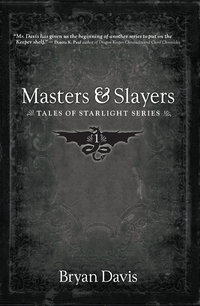
Book Review - Masters & Slayers by Bryan Davis

6.08.2011

Masters & Slayers (Tales of Starlight #1) by Bryan Davis
Expert swordsman Adrian Masters attempts a dangerous journey to another world to rescue human captives who have been enslaved there by dragons. He is accompanied by Marcelle, a sword maiden of amazing skill whose ideas about how the operation should be carried out conflict with his own.
Since the slaves have been in bonds for generations, they have no memory of their origins, making them reluctant to believe the two would-be rescuers, and, of course, the dragons will crush any attempt to emancipate the slaves. Set on two worlds separated by a mystical portal, Masters and Slayers is packed with action.

(Autographed copy received from author.)

This is one of those books where I feel like if I get too excited and type away, I'll give way too much away. It was a busy time at work when I read this, and I'm even thinking it was a good thing 'cos the excitement was rather enjoyable. It will most definitely make you think "One more chapter before I go to sleep" as you see the clock hit 4am, especially if you're the "Dragons? Count me in!" kind of person like I am.

This is the story of young warriors who set out to save the humans kidnapped by dragons and kept at the dragon planet for forever. Adrian is one of the main characters, who gives up the glorious world of the tournaments to find the dragon planet and rescue the kidnapped. One of the popular warriors, Marcelle, is also in this with Adrian. They must figure out where the portal is, but they must be careful about it because their society will not like what they're up to.

To me, the characters are pretty much as important as the story itself, maybe even more. And I really, really liked Marcelle. Most of the times when there's a female heroine, they're either too girly, or stupidly brave. Marcelle was pretty much perfect in the way that she's a girl, but she's a strong girl who can take care of herself without going overboard and putting the reader off.

On their quest to find the dragon planet, there are also other characters who enter the scene, and there's lots of action, sword-fighting, slaying dragons... There's also the interaction between the characters-- they must decide whom they can trust, who's the enemy, who's on their side. Some of the characters we don't know much about yet, but I have a feeling they'll show up in the following books, and we'll have a lot more "whoa!" moments. Masters & Slayers has everything one looks for in a book: strong characters, betrayal, love and action.

Update.

6.06.2011

I haven't posted anything for the longest time, and even though I couldn't read as much as I'd like to, reviews just piled up! Here's a list of the reviews that will be coming up, and I'm hoping I'll get around to them soon.


Masters & Slayers (Tales of Starlight Series #1) - Bryan Davis


Shibumi - Trevanian
Esther's Inheritance - Sandor Marai

Blog Design by Nudge Media Design | Powered by Blogger

Creative Commons License
This work is licensed under a Creative Commons Attribution-NonCommercial-NoDerivs 3.0 Unported License.
Header'ımı sevgili kardeşim Jaffar yaptı.